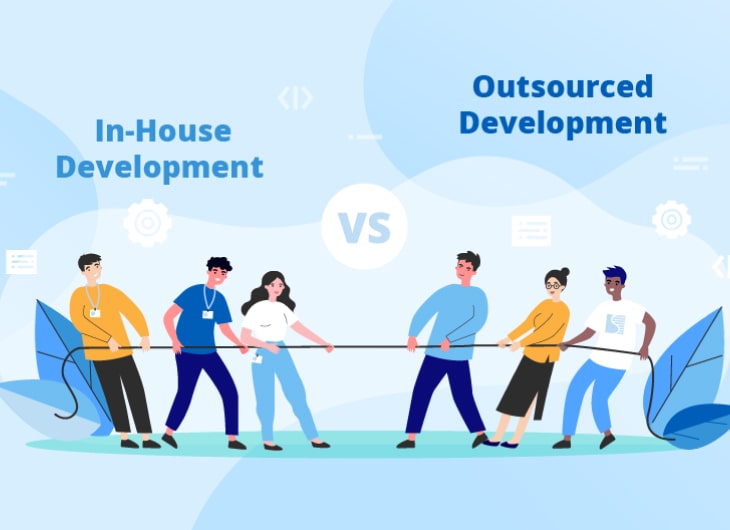
When embarking on a software development project, one of the crucial decisions you'll face is whether to engage a software house or pursue in-house development. Each approach has its advantages and considerations, and the choice depends on various factors aligned with your project's goals, budget, and timeline.
Software House:
Pros:
- Expertise and Specialization: Software houses often consist of teams with diverse skills and expertise. They are equipped with a range of talents, including developers, designers, and project managers, providing a comprehensive skill set for your project.
- Cost-Efficiency: While it might seem counterintuitive, hiring a software house can be cost-effective. They already have the necessary infrastructure, tools, and resources in place, saving you from the initial investment required for an in-house team.
- Faster Time-to-Market: With an experienced team and established workflows, software houses can often deliver projects more quickly. Their familiarity with various technologies allows for efficient development cycles.
- Scalability: Software houses can easily scale their teams according to project requirements. Whether you need to speed up development or scale down after project completion, they offer flexibility.
Cons:
- Less Control: Working with an external entity means relinquishing some control over the development process. Communication and project management become crucial to ensuring alignment with your vision.
- Communication Challenges: Collaborating with a remote team may lead to communication challenges. Time zone differences and language barriers can potentially slow down the decision-making process.
- Dependency on Third-Party: Relying on a software house makes your project dependent on their availability and priorities. If they have multiple projects, your timelines might be influenced by their overall workload.
In-House Development:
Pros:
- Direct Control: With an in-house team, you have direct control over the development process. You can make real-time decisions, adjust priorities, and closely monitor the progress of your project.
- Better Integration: In-house teams are more immersed in the company culture and objectives, leading to better integration of the software with your overall business strategy.
- Increased Security: In-house development can provide an added layer of security, especially when dealing with sensitive data. You have more control over security protocols and can implement measures tailored to your specific needs.
Cons:
- Higher Costs: Establishing an in-house development team involves significant upfront costs. From salaries and benefits to infrastructure and training, the financial investment is substantial.
- Limited Expertise: Depending on the size of your company, your in-house team might have limitations in terms of expertise. They might not cover the entire spectrum of skills needed for a complex project.
- Slower Recruitment and Scaling: Building an in-house team takes time. Recruitment, onboarding, and skill development are processes that can slow down the initiation of your project. Scaling the team up or down might also be slower than with a software house.
Conclusion:
In deciding between a software house and in-house development, weigh the pros and cons against your project's specific requirements. Consider factors such as budget, timeline, desired level of control, and the complexity of the project. Ultimately, the right choice depends on finding the balance that aligns with your goals and resources.